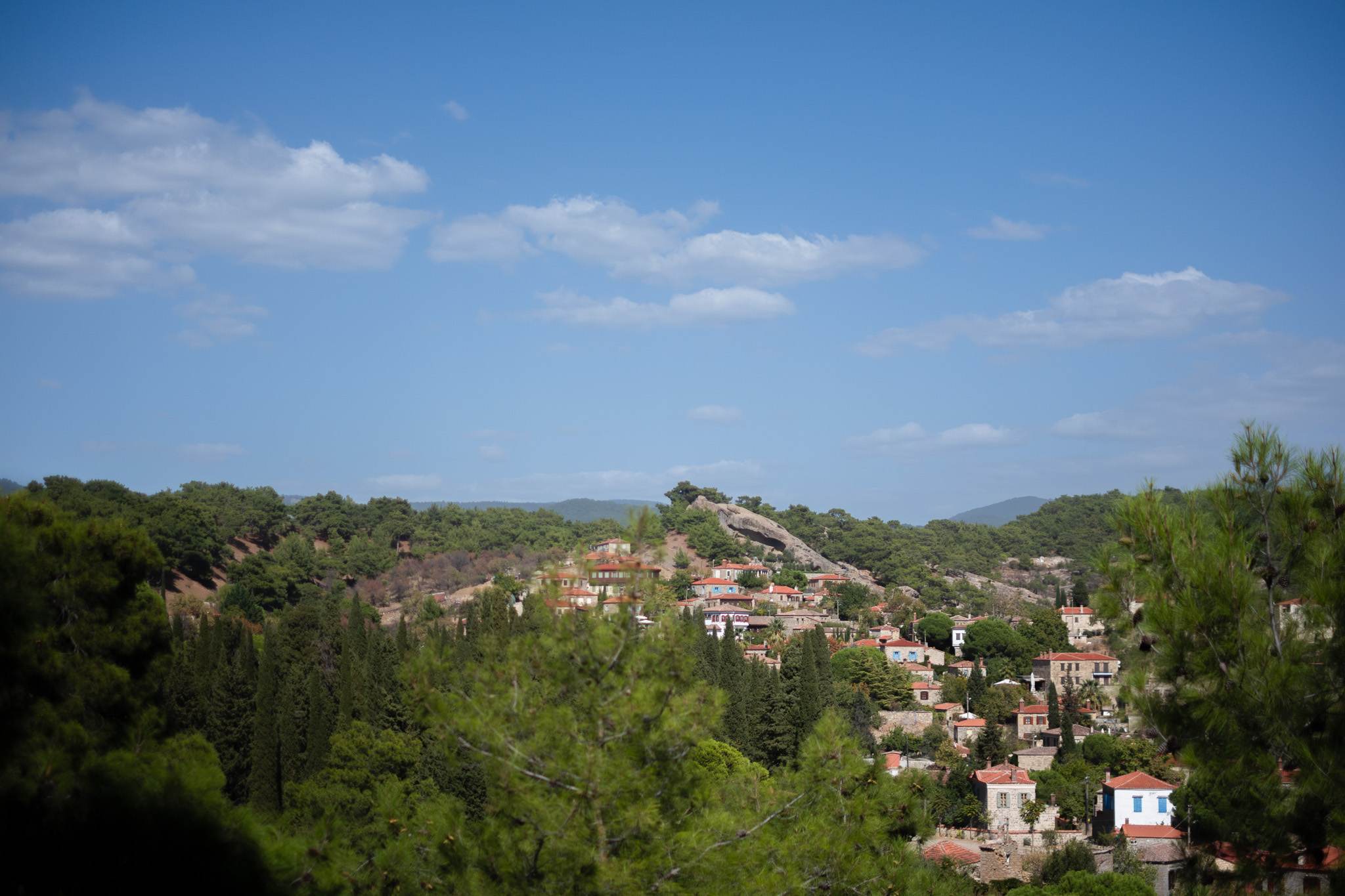
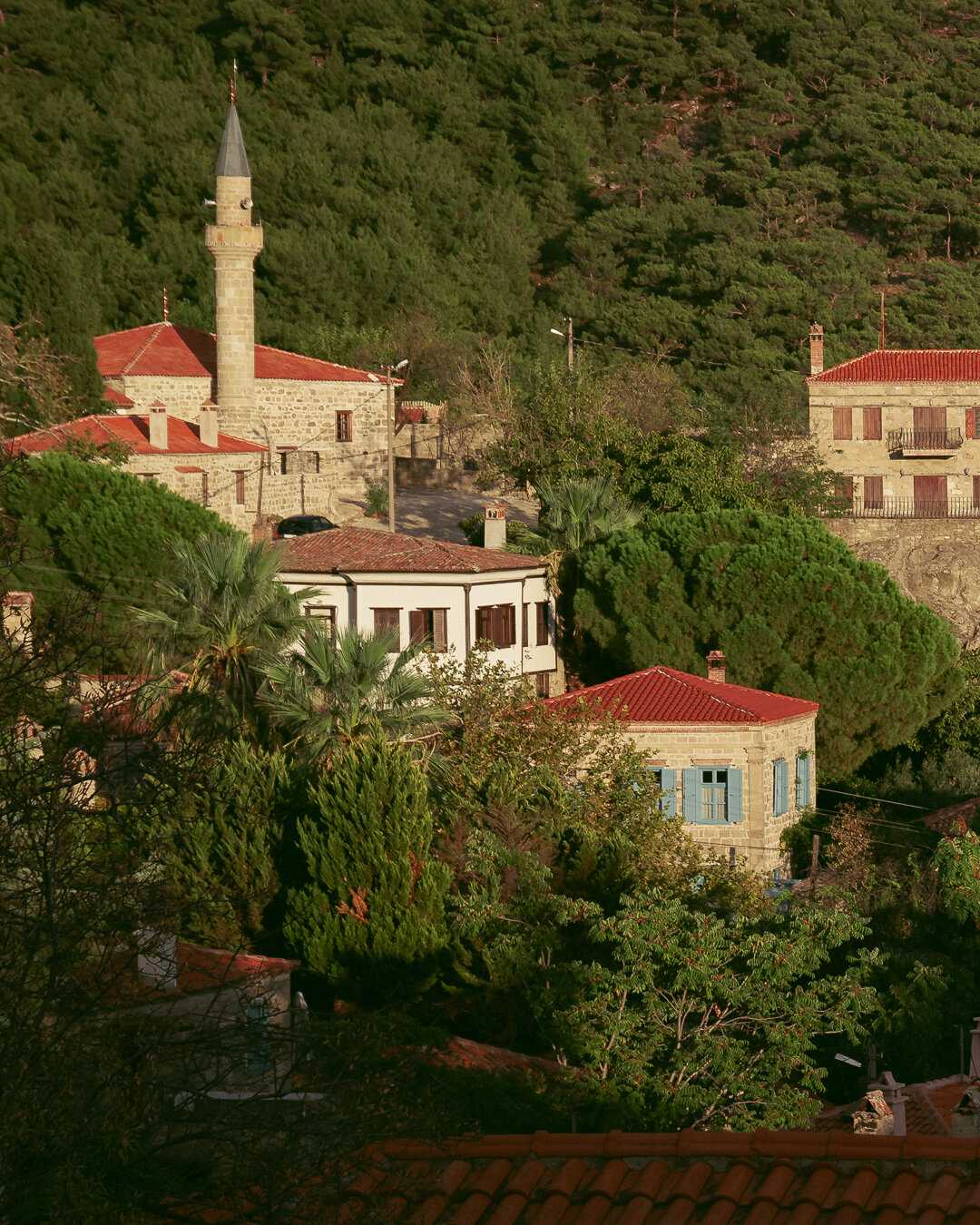
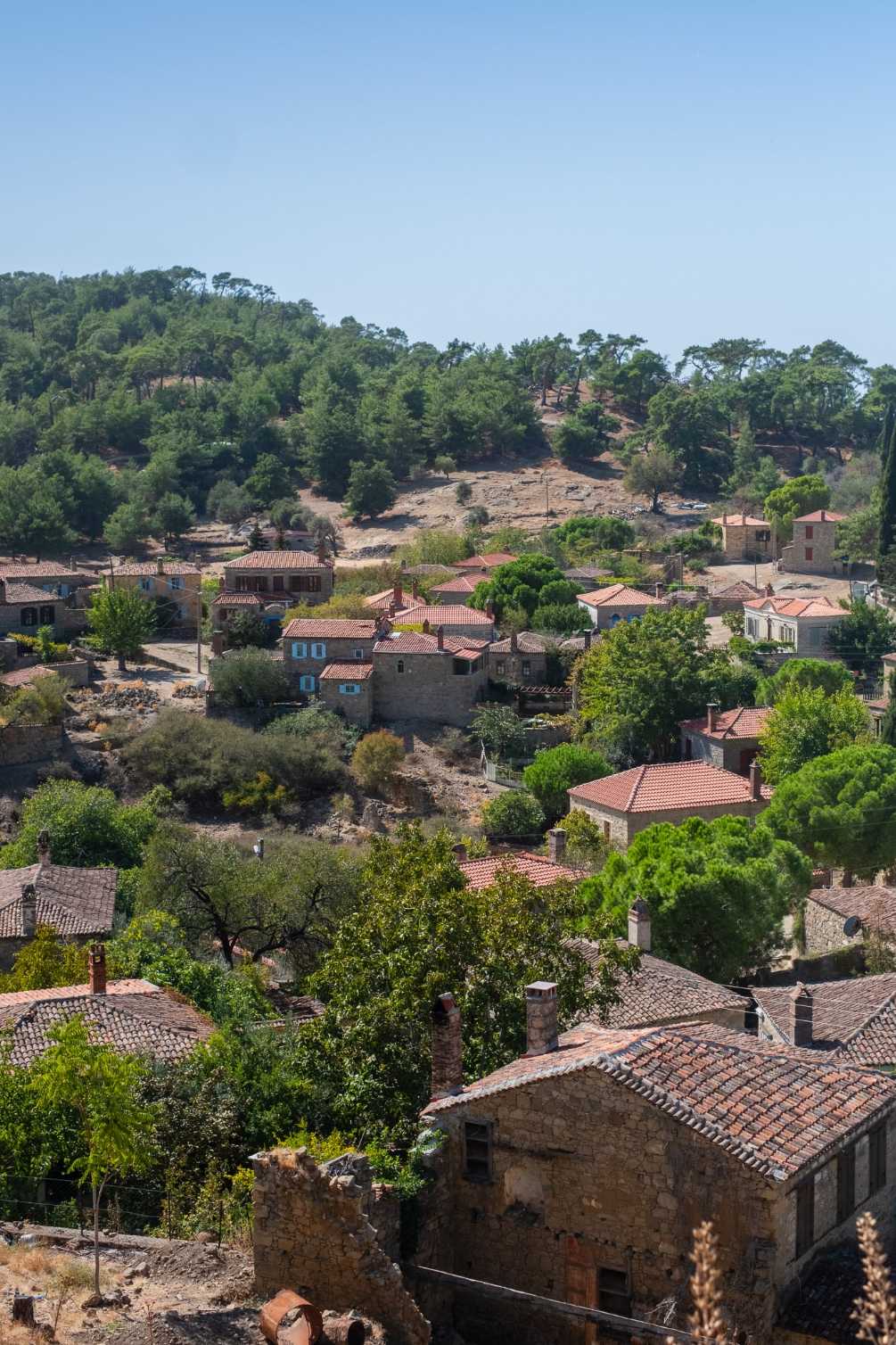
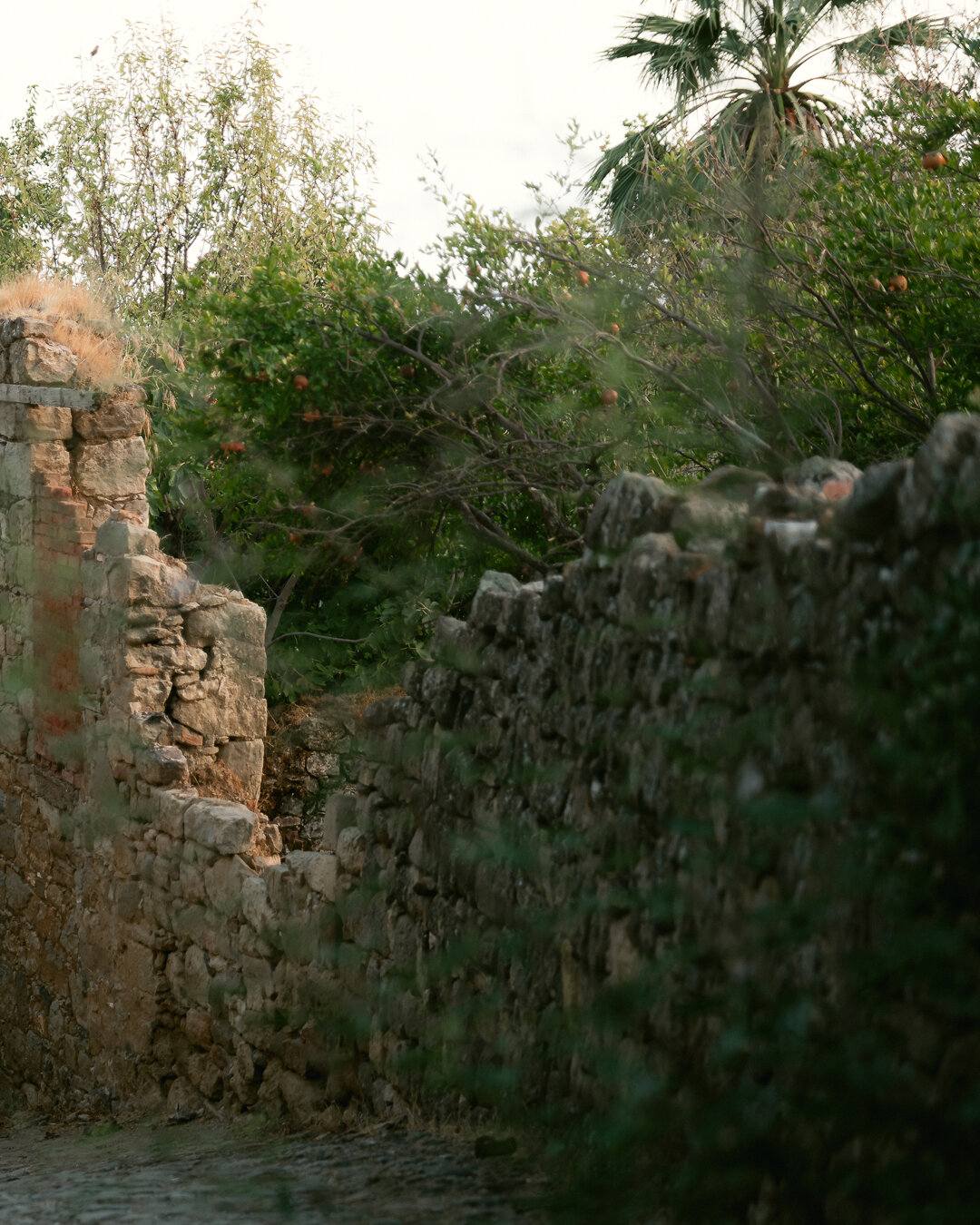
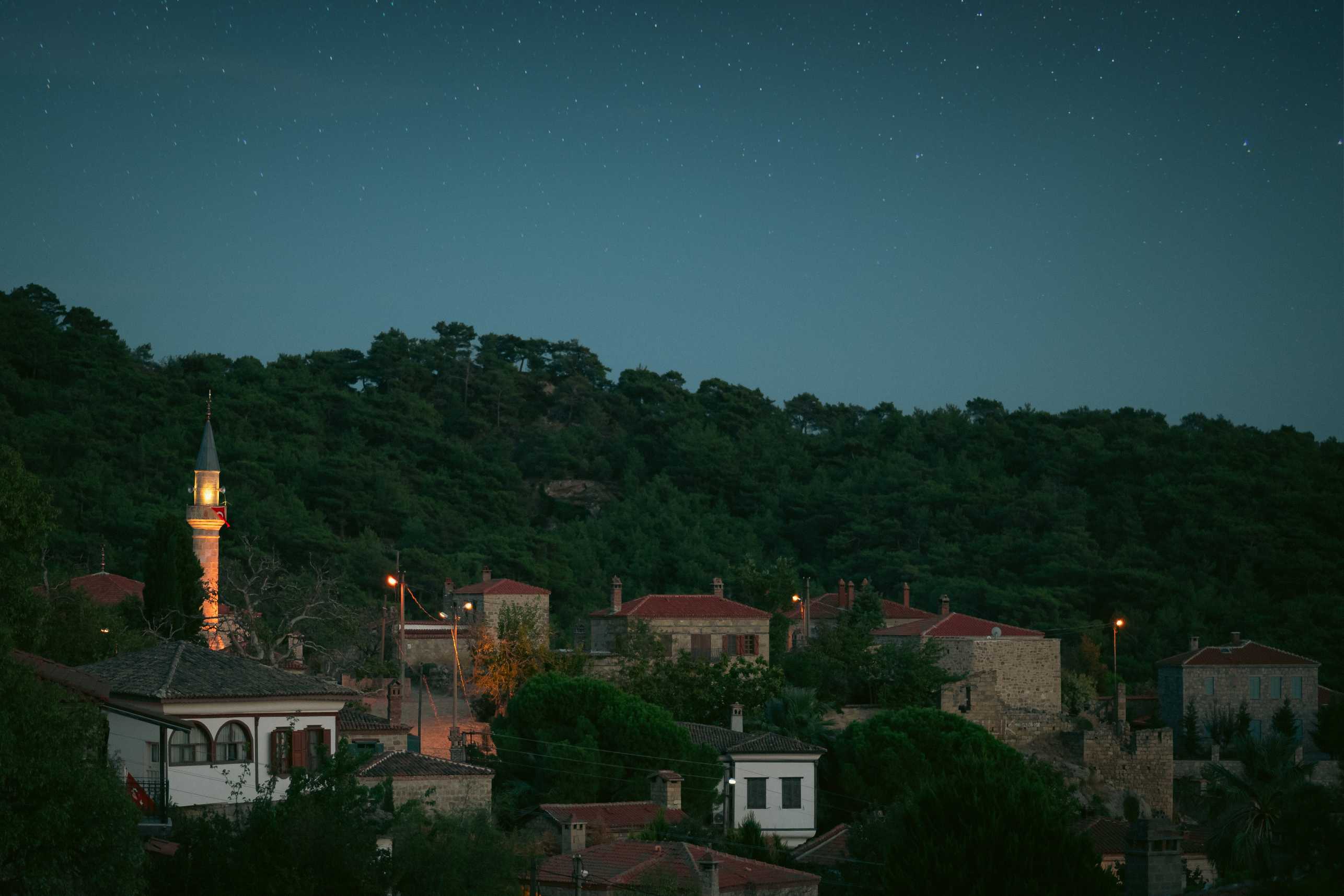
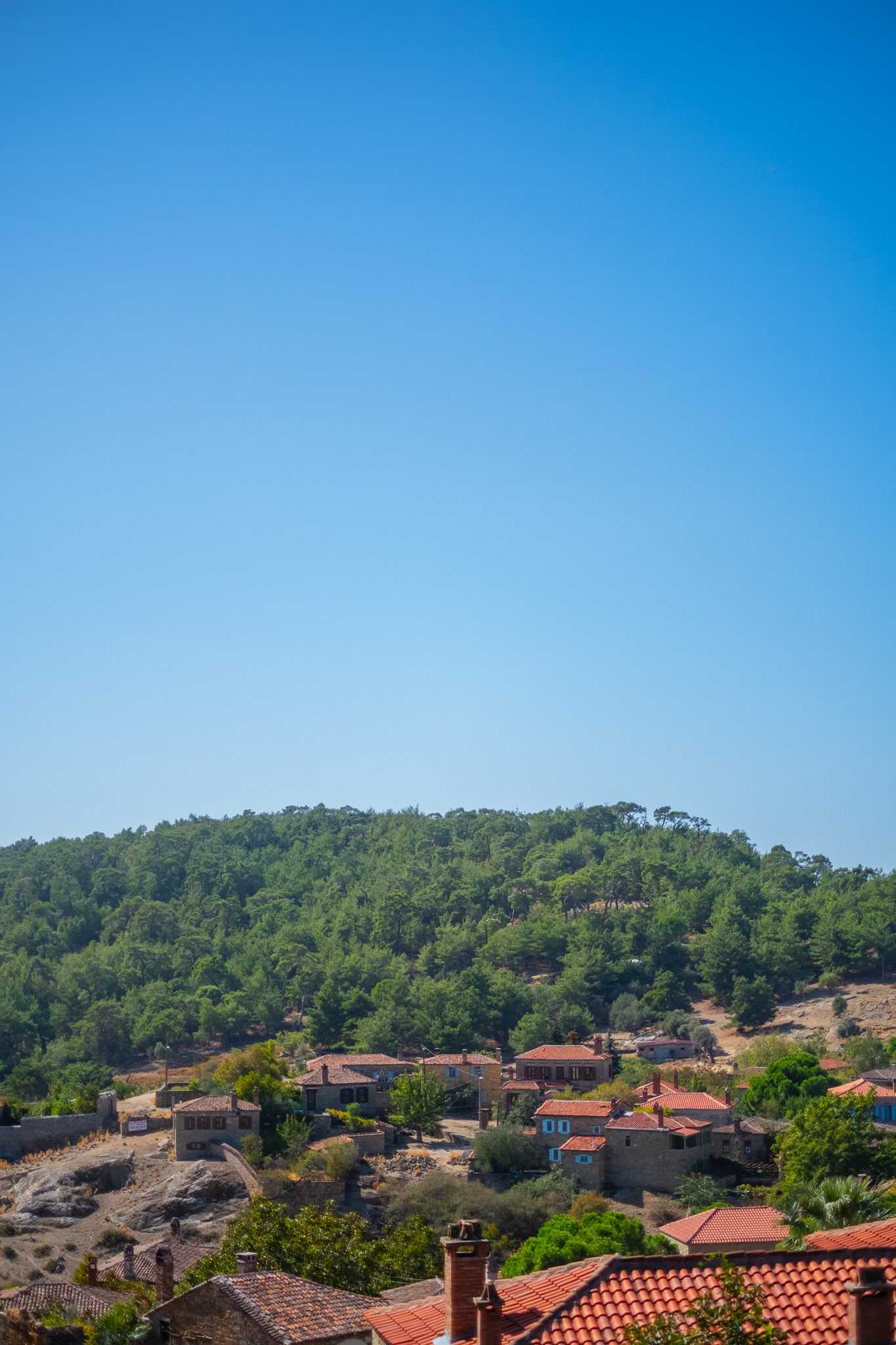
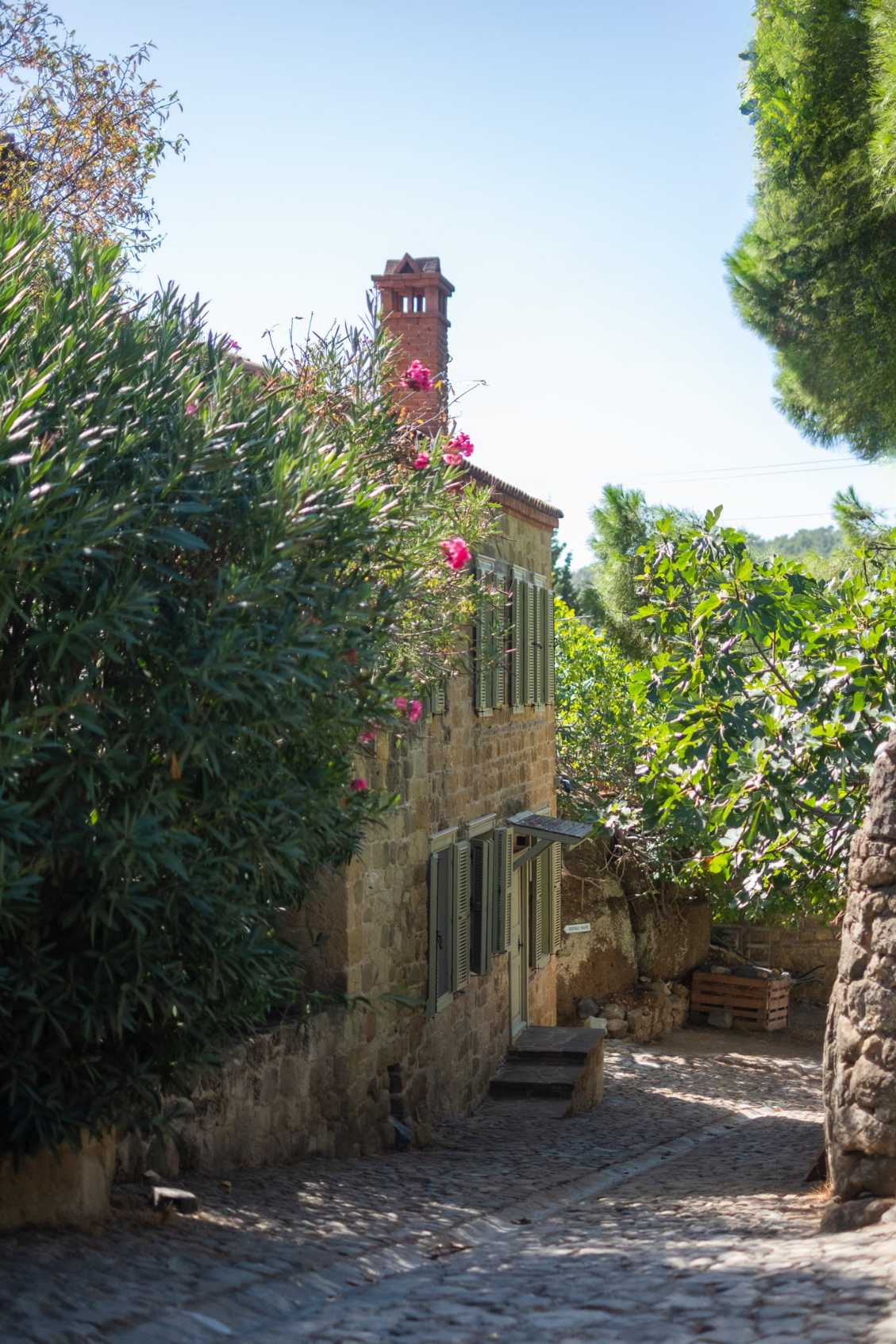
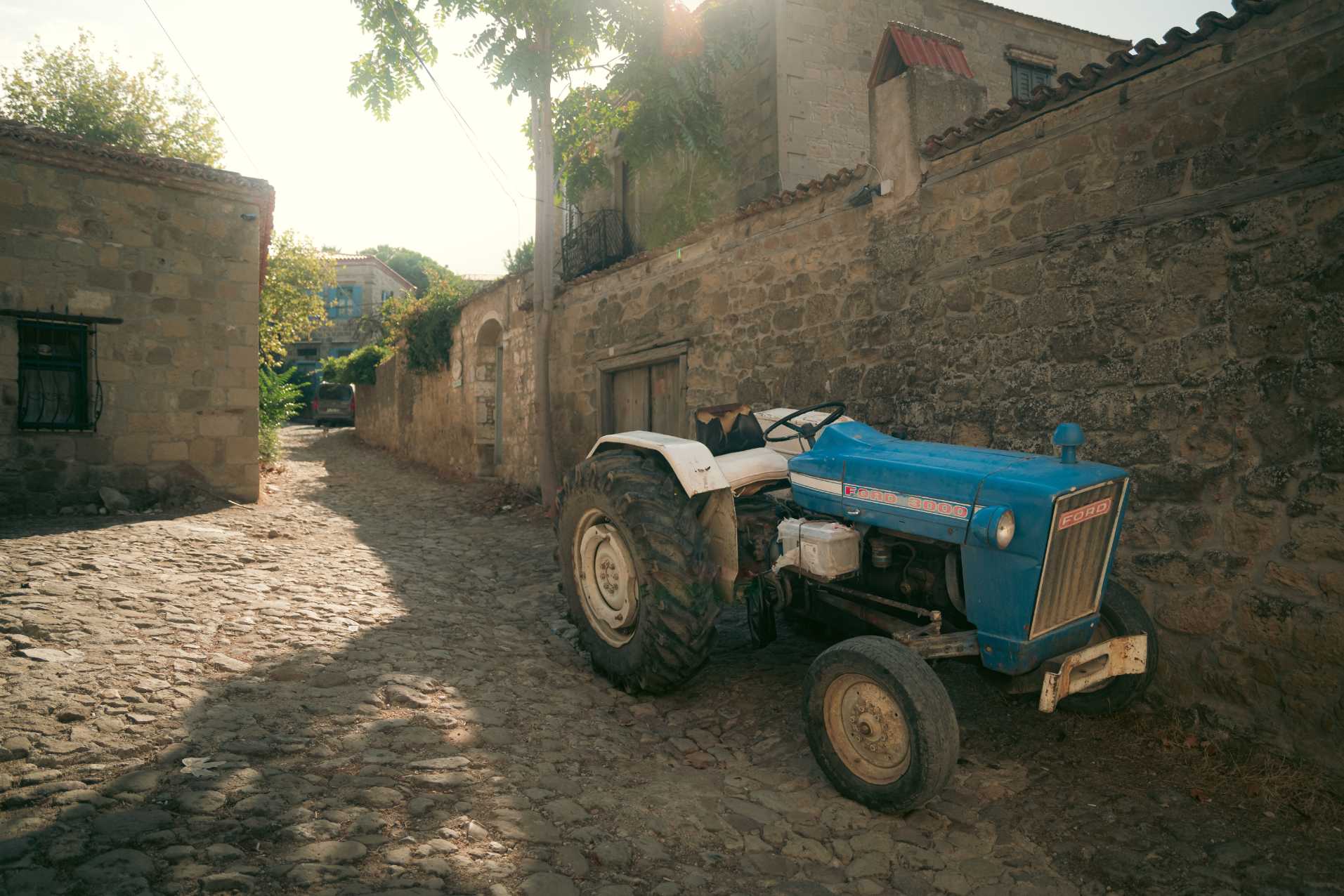
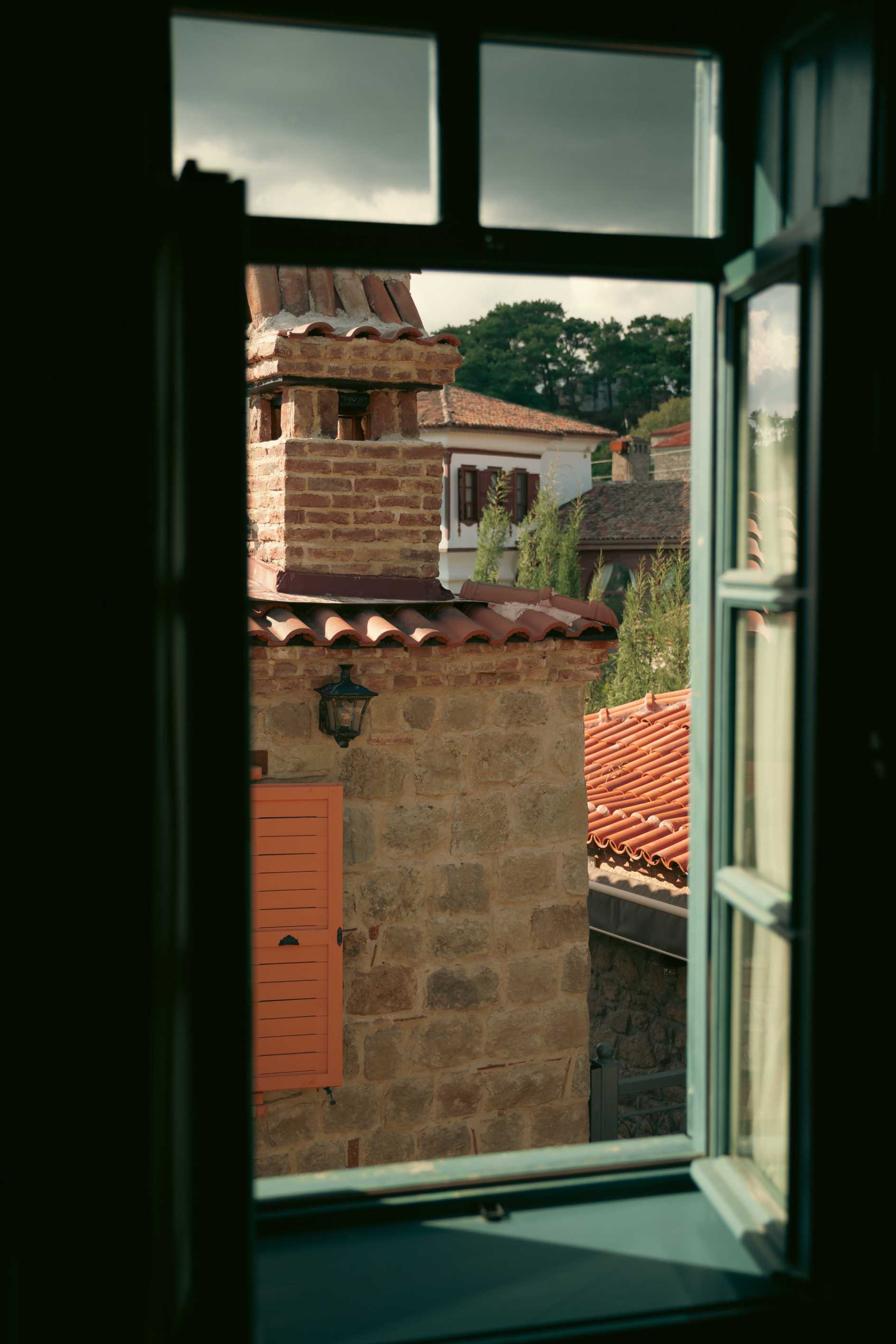
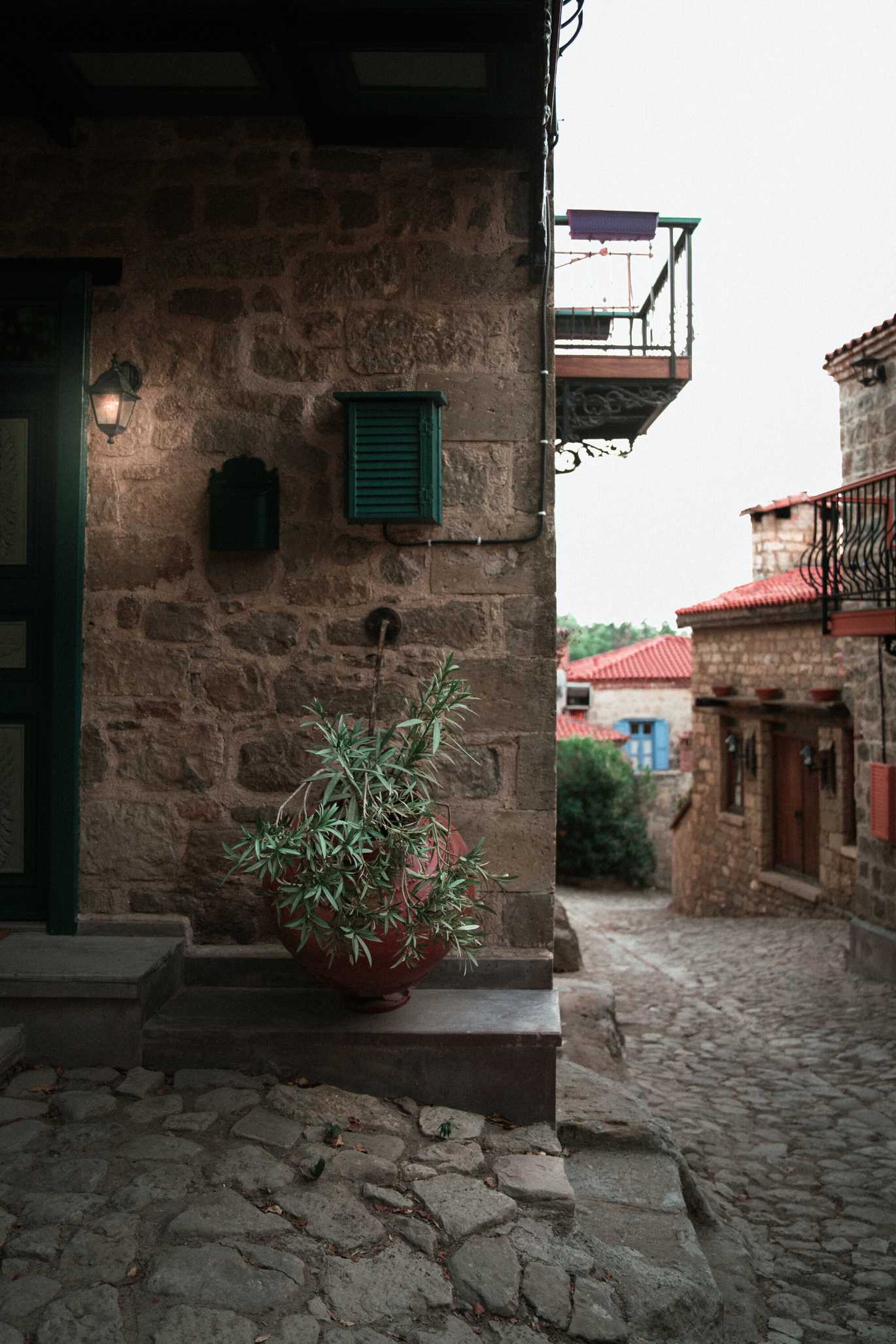
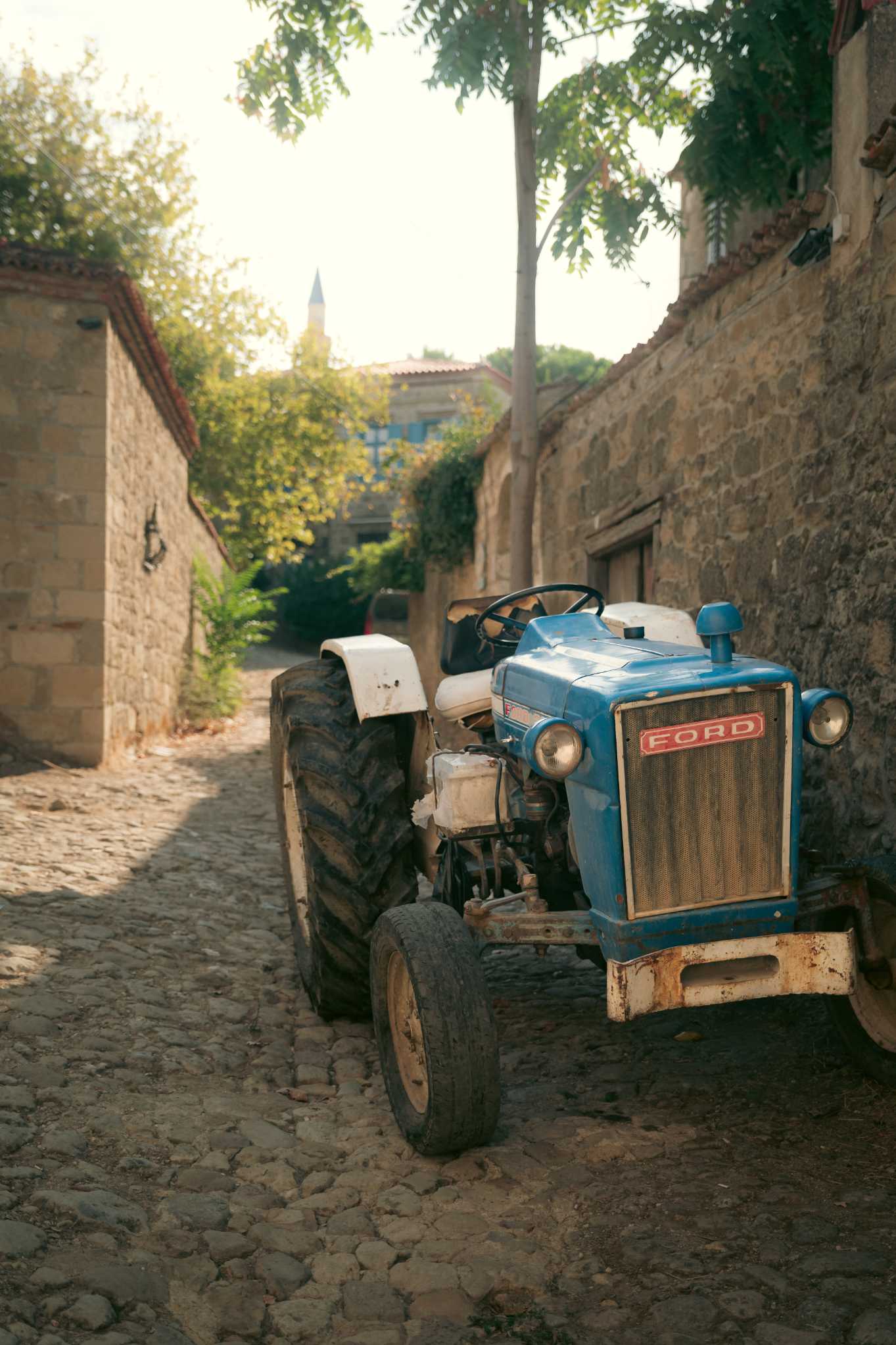
Adatepe Village, where the unique synthesis of Turkish and Greek cultures comes to life, has witnessed the events of the population exchange period. Declared an urban protected area in 1989, this village offers a unique experience with its stone houses, narrow streets, olive and pine trees, and magical atmosphere that carry the marks of time through carefully executed restorations. Embraced by the oxygen-rich air of Kaz Dağları, the tranquility of the North Aegean, and the historical beauty of Assos, Adatepe Village is a unique holiday destination that awaits you throughout all four seasons.
After strolling through the shaded streets of the village, you can visit the Adatepe Village Primary School (Taş Mektep), which served from 1974 to 1985, and enjoy the view of the Aegean Sea from the valley behind the historical mosque dating back to the Seljuk period. In the late afternoon, we recommend a short walk to the Zeus Altar, where you can watch the sunset accompanied by an extraordinary view.
Adatepe Village is located in a special area known for its historical and cultural richness, designated as a first-degree protected site. It is situated in the north of the Edremit Gulf, on the western slope of Kaz Dağları, 4 km from Küçükkuyu, within the Ayvacık District of Çanakkale. Adatepe Village, with its stone architecture and surrounded by olive and pine trees, dates back to ancient times. The area has been ruled by several civilizations, including the Hittites, Lydians, Persians, Romans, and Byzantines, and in 1360, it became part of the Ottoman Empire. Due to its rich historical heritage, the region is highly significant for those seeking historical destinations.

Adatepe Village and Its History
At the entrance of the village, there is the "Zeus Altar," believed to date back to the late Roman period. It is said that this altar was dedicated to Zeus, the chief god in Greek mythology, during the Roman era. Homer mentions that during the Trojan War, the chief god Zeus watched the battle from this very spot. It is also believed that the altar was used as a cistern during the Byzantine period.
The settlement of the Turks in Adatepe Village began during the Seljuk period. Before the War of Independence, Turks and Greeks lived together for many years, making a living through olive cultivation and livestock farming. In 1924, during the Great Population Exchange, the Greeks left the village for Greece, and Muslim Turks from Crete were settled in their place.
Adatepe Village was known as a thriving community with cafes, a bakery, a barber, a bathhouse, a tavern, and a school, with a population of about 1,500 people and approximately 400 households, until the early 1950s. However, by the 1950s, as commerce shifted to the coastal areas, the population of the village decreased. In the 1980s and beyond, Adatepe was rediscovered by people from big cities, and its traditional stone houses were carefully restored, bringing the village to its present-day appearance.
The settlement of the Turks in Adatepe Village began during the Seljuk period. Before the War of Independence, Turks and Greeks lived together for many years, making a living through olive cultivation and livestock farming. In 1924, during the Great Population Exchange, the Greeks left the village for Greece, and Muslim Turks from Crete were settled in their place.
Adatepe Village was known as a thriving community with cafes, a bakery, a barber, a bathhouse, a tavern, and a school, with a population of about 1,500 people and approximately 400 households, until the early 1950s. However, by the 1950s, as commerce shifted to the coastal areas, the population of the village decreased. In the 1980s and beyond, Adatepe was rediscovered by people from big cities, and its traditional stone houses were carefully restored, bringing the village to its present-day appearance.